Colored pencils vary considerably even within the same brand. Pigment load, filler content, binder formula, opacity, value, and best handling practices can change from color to color.
Let’s test one of Prismacolor’s most popular colors:

A very confusing name…
You want magenta so you grab the called Magenta but it looks red.
So you look for something more magenta-ish and it’s called Process Red? What’s up with that?
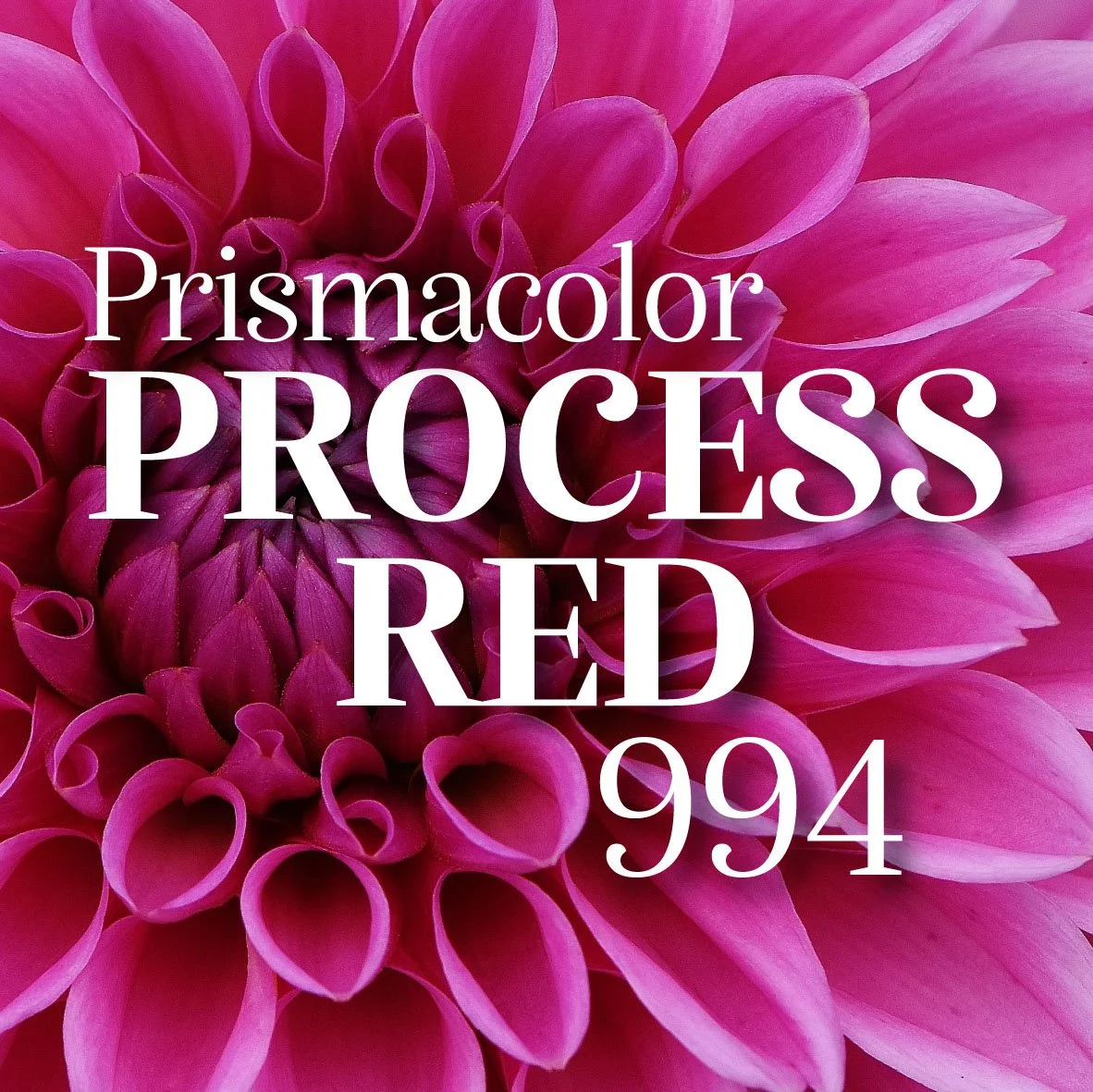
No matter what they call it, Process Red 994 is one of Prismacolor’s best selling colors. This cheerful hot pink color is highly prized by botanical artists but it’s also the secret weapon of many portrait artists.
Let’s look closer at Prismacolor’s true magenta pencil.
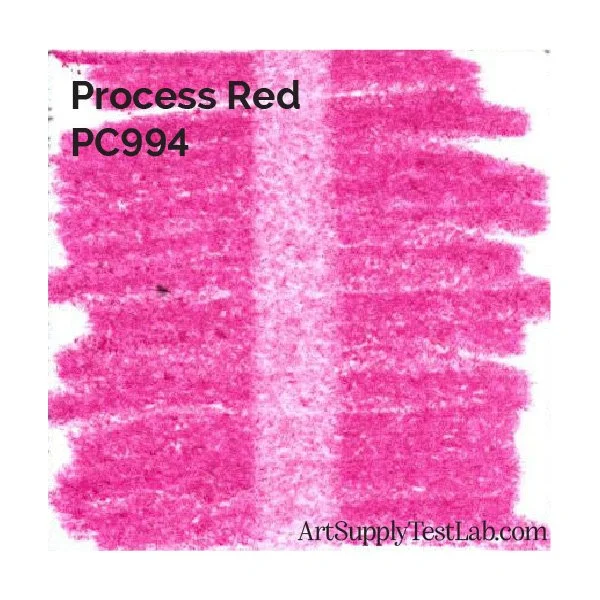
The Color: Prismacolor Process Red 994
Name: Process Red sounds like a red colored pencil, right? In printing, “process” colors are the saturated primary colored inks a printer uses to mix other colors of ink. They also use Process Blue and Process Yellow. The inks in your home office printer are process colors.
But why Red? It’s weird but in old timey print shops, they referred to magenta as red.
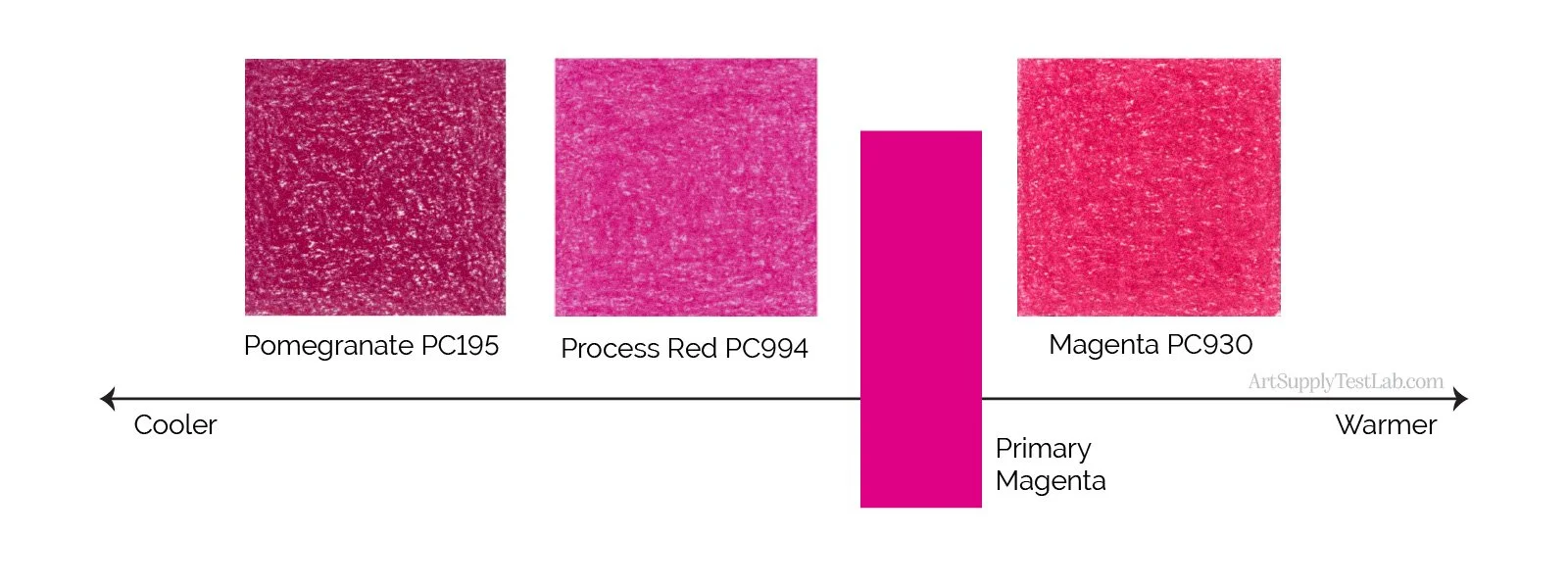
Temperature: Process Red is a balanced magenta which doesn’t lean warm or cool.
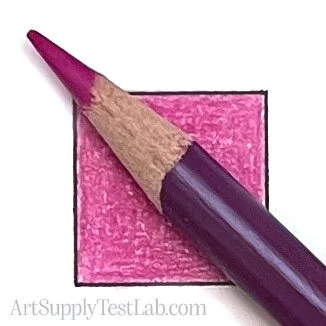
Indicator Accuracy: The paint on Prismacolor Process Red 994 is a complete mismatch. The barrel color is noticeably darker and cooler than the core color.
Having said that, it’s simple enough to look at the color of the pencil core (lead) which is very accurate to the darkest value of this color.
Availability: Process Red 994 is included in Prismacolor Premier sets of 36, 48, 72, 132, and 150, plus the 23 piece Premier Manga set. It’s also available individually (open stock), although some retailers may not carry all 150 colors.
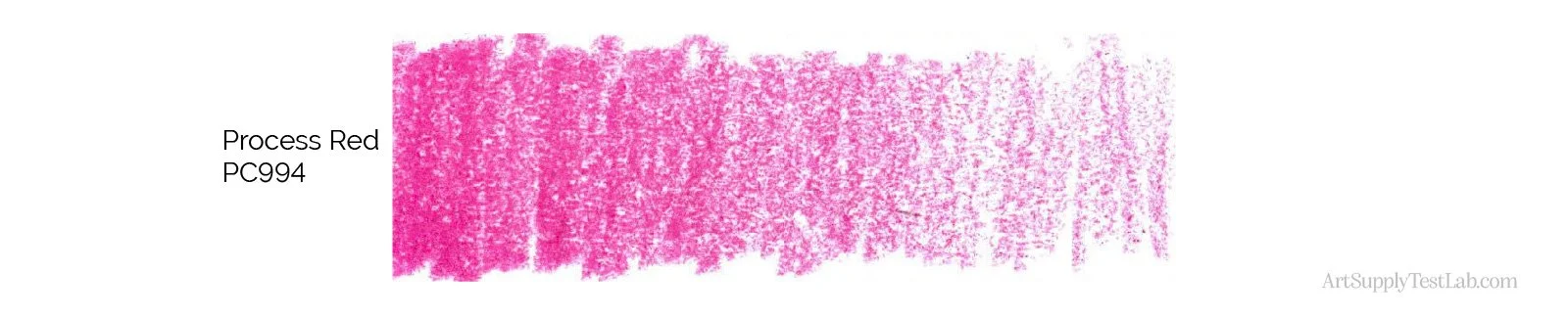
Test Results: Prismacolor Process Red 994
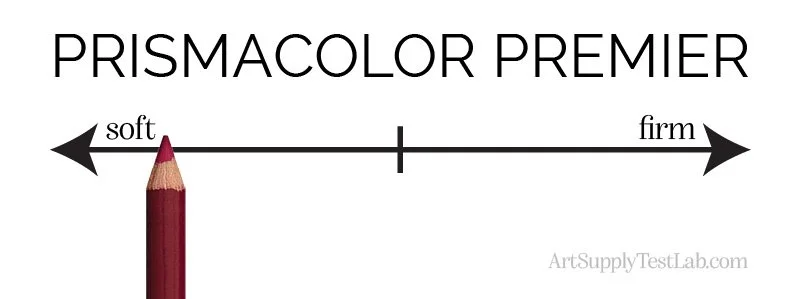
Core Firmness: Prismacolor Premier pencils are well known as one of the softest artist grade pencils on the market today. Process Red has that traditional soft and waxy feel.
Oil or Wax Base: Read more about why this is nonsense here.
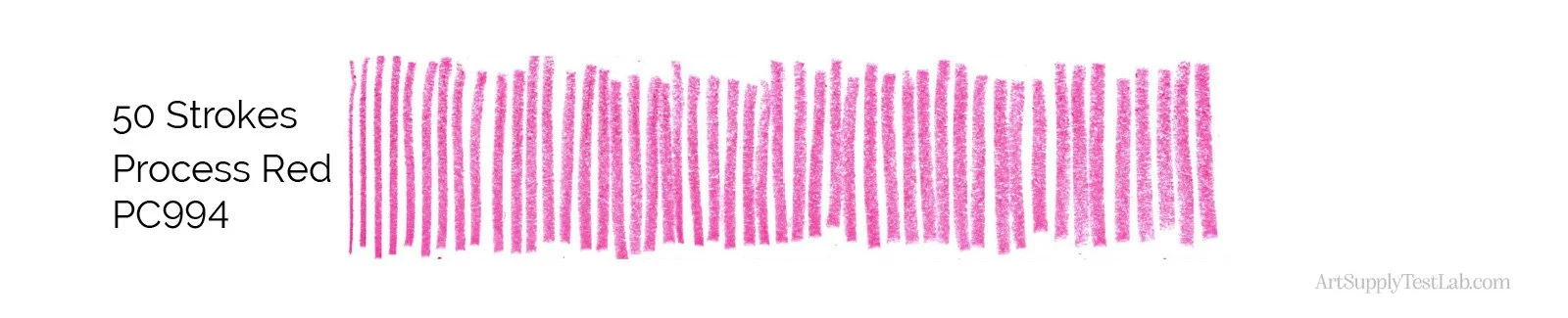
Point Retention: Like all soft colored pencils, Process Red does not hold a point well.
Starting with a freshly sharpened pencil, I lost the fine point almost immediately. This pencil is not recommended for detail unless you sharpen frequently.
All tests are conducted on Strathmore Bristol 300 Smooth for consistency.
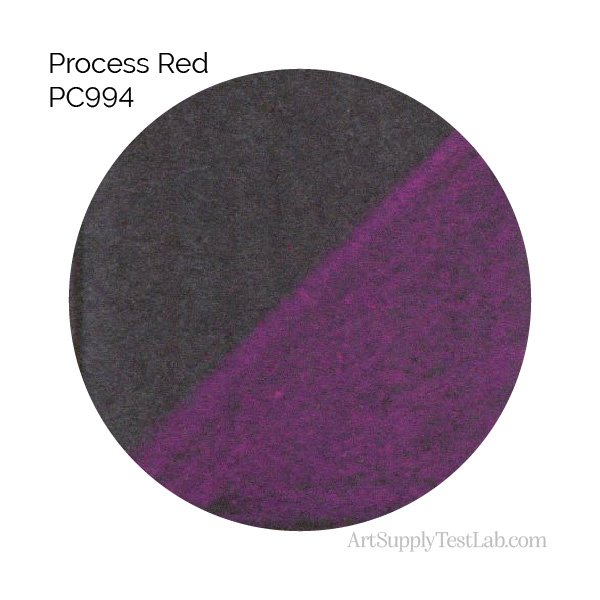
Opacity: Color opacity is one of the most important features of a colored pencil. Read why here.
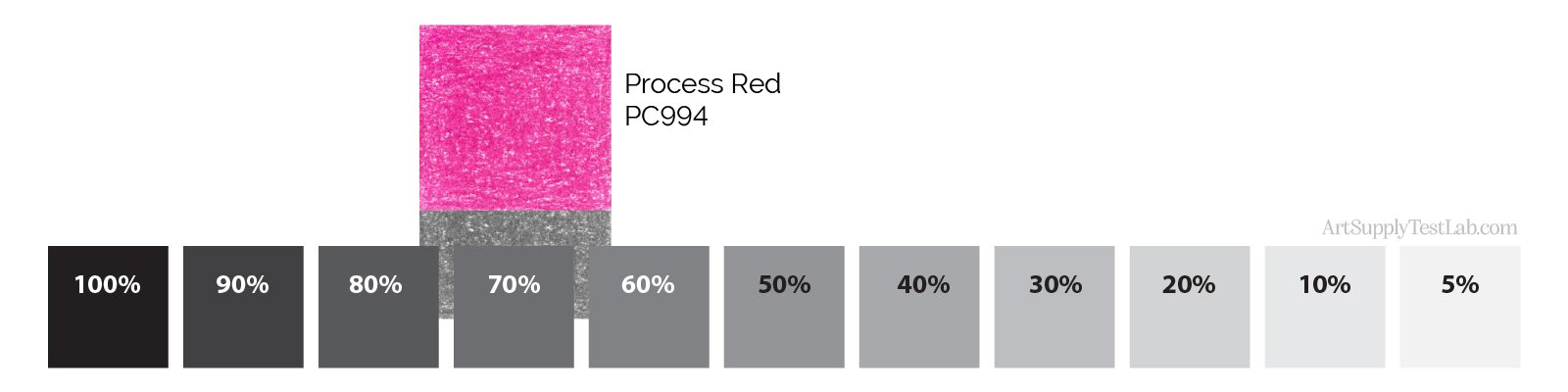
Process Red is a near-translucent pencil which is not surprising since most Prismacolor darks are translucent.
When colored over a black swatch, to the naked eye, this pink barely registers. But here in a scan of that same swatch, note how the scanner picked up a hint of color and a bit of glow.
It’s just a guess but I think there’s a florescent additive in Process Red— not a lot but just enough that it catches the scanner’s light sensor.
Glazing: I use Process Red for glazing a lot. It adds a nice pop of warmth to any color below.
Masking: Translucent pencils like Process Red cannot be used to mask or block previous layers of pencil.
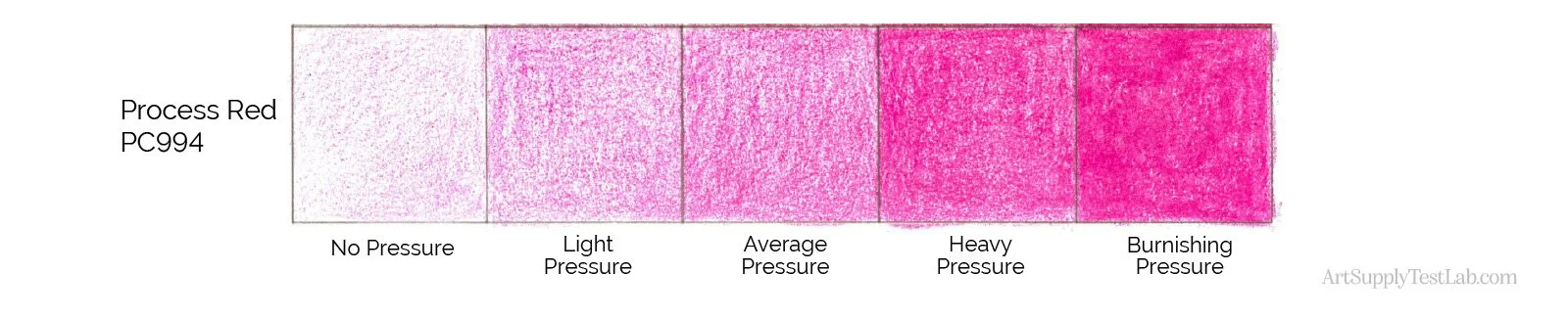
Pigmentation: While I can’t measure true pigment load without laboratory equipment, Process Red behaves like a finely pigmented pencil.
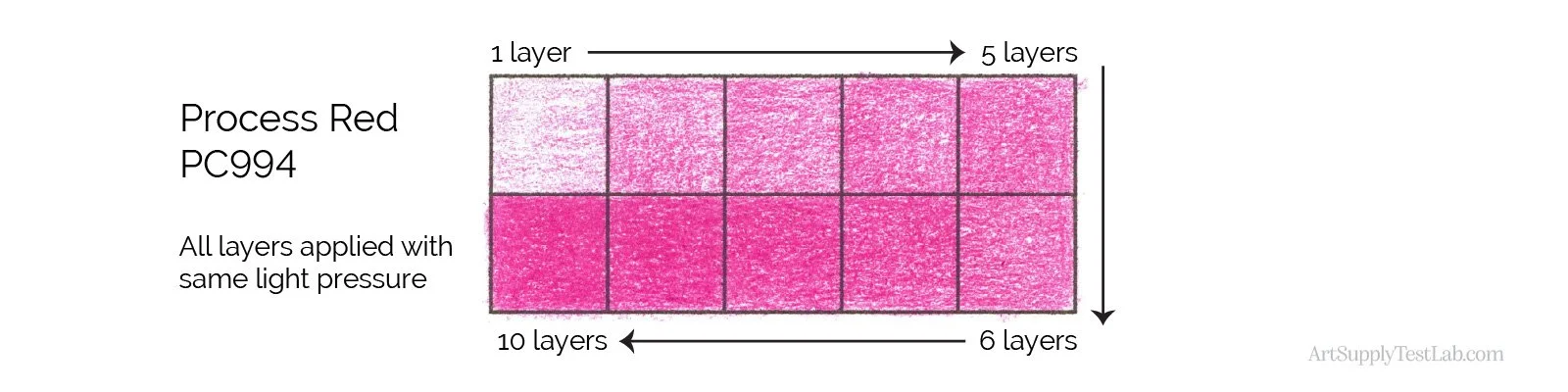
The color builds generously with changes in hand-pressure (shown above) or with repeated layers of light consistent pressure (below).
Glide: Like most Prismacolor Premier pencils, Process Red has a slick, almost wet feel to it. The color applies smoothly with a consistent glide. I don’t detect any sandy feeling of grit which typically indicates a finely ground pigment.
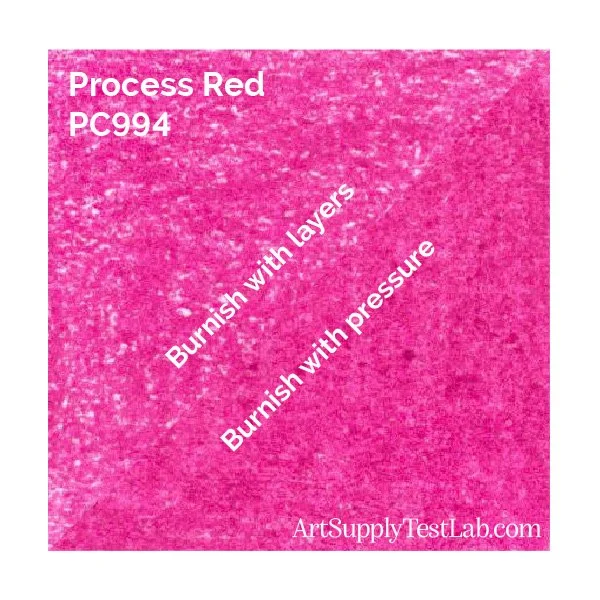
Laydown Consistency: When applied with light to moderate pressure in even layers, Process Red’s laydown looks consistent with no streaks of binder or blotchy pigment.
With heavy burnishing pressure, Process Red retains the smooth look although when magnified (photo left), we can see some minor clumping start to form.
I don’t typically recommend burnishing with a heavy hand; I prefer to build to the burnishing stage gradually in light layers. But if you insist, Process red is a good candidate for single-coat burnishing without pilling or clumps.
Paper Adhesion: There were no issues getting Process Red 994 to stick to Smooth Bristol. In fact, I specifically recommend Prismacolor Premier pencils when working on ultra-smooth or polished marker papers where adhesion is usually a problem. Prismacolor often sticks when nothing else will.
Layering Adhesion: I had no issues getting Process Red to stick to itself. In the sample above, the area burnished with light layers (top left half) shows 11 moderate pressure layers and I saw no pilling or trenching in the process. Excellent adhesion is typical of Prismacolor Premier.
Erasure: Soft colored pencils are not generally not erasable.
With 10 firm swipes of a non-abrasive polymer eraser over a pressure-burnished swatch, the best I was able to do was lift most of the color— but you can still see significant pigment embedded in the tooth and the paper is permanently stained.
Shedding: Process Red is a fairly dusty pencil which sheds bits of color particles when you press firmly. To be clear, all colored pencils shed a bit but Process Red casts off a bit more than average.
To avoid grinding the dust into your paper with the side of your hand, I recommend stopping periodically to lightly brush your project clean with a soft hake brush (Amazon) (Blick), a large makeup brush (Amazon), or a natural fiber drafting brush (Amazon) (Blick).
Point & Breakage: I sharpen all my colored pencils to a long point using the X-Acto School Pro (Amazon) (Blick).
Process Red was tested with this same long point. At no time did I break my lead or snap off the tip, not even when coloring with burnishing level pressures.
Process Red is a sturdy color which can handle firm pressure but not abuse.
IMPORTANT WARNING:
ASTM D6901-06 Rankings:
I - Excellent, 100+ years
II - Very Good, 50-100 years
III - Good, 15-50 years
IV - Poor, 1 year
V - Very Poor, weeks - months
Lightfast Rating: Process Red 994 scores an V (very poor, fugitive) rating using certified ASTM D6901-06 lightfast testing.
See Prismacolor’s full chart with test results here.
Artists should be careful not to sell originals using Process Red but it’s fine for disposable practice exercises and covered projects which are not exposed to light like sketchbooks, journals, and coloring books.
It should be noted that lightfastness is actually quite rare for magenta art supplies. Magenta pigments are naturally fugitive.
Need a lightfast substitute? This is a very tough color to substitute because Process Red has a brightness which is simply not available in lightfast pencils. For darker, less vibrant magentas, try Caran d’Ache Luminance Purplish Red #350 (Blick) or Derwent Lightfast’s Magenta (Blick). But I need to stress, both substitutes are missing the bright cheerfulness and Opera Rose vibe of Process Red. There’s a reason artists love Process Red despite it’s terrible lightfastness.
Process Red in Action:
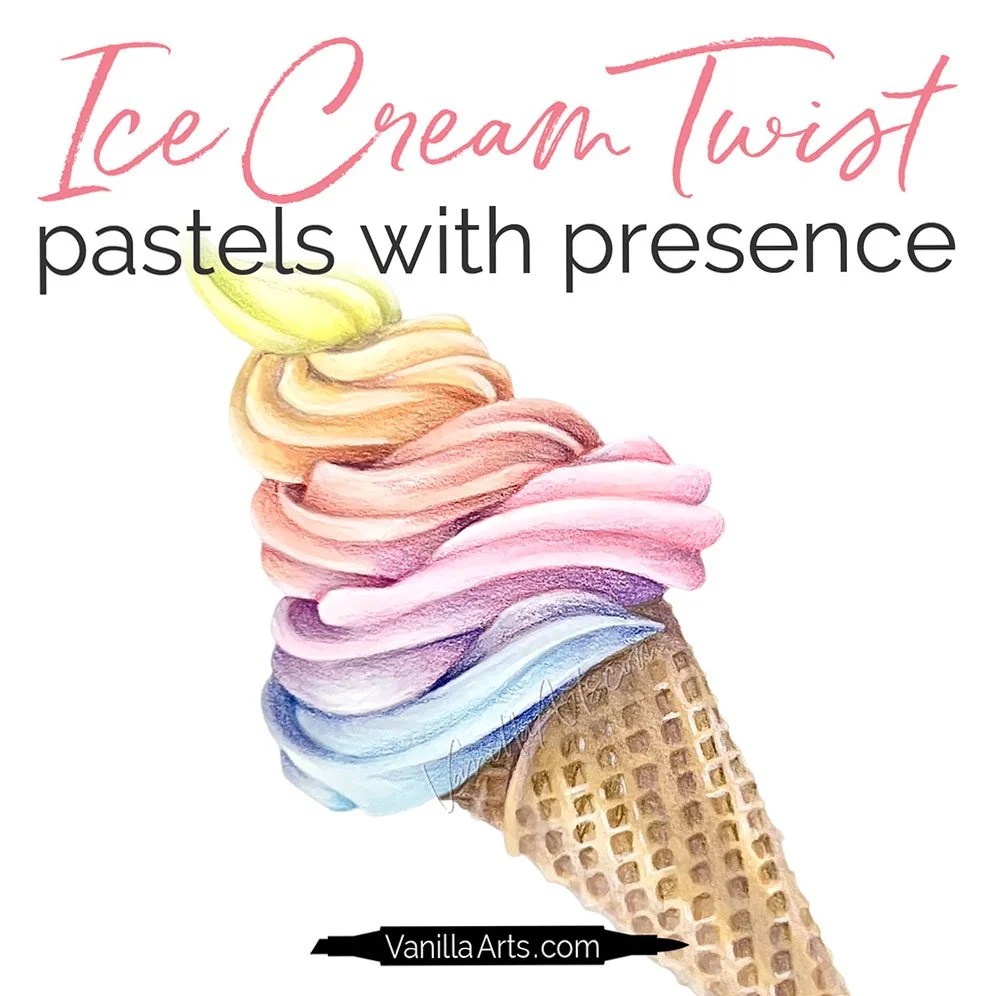
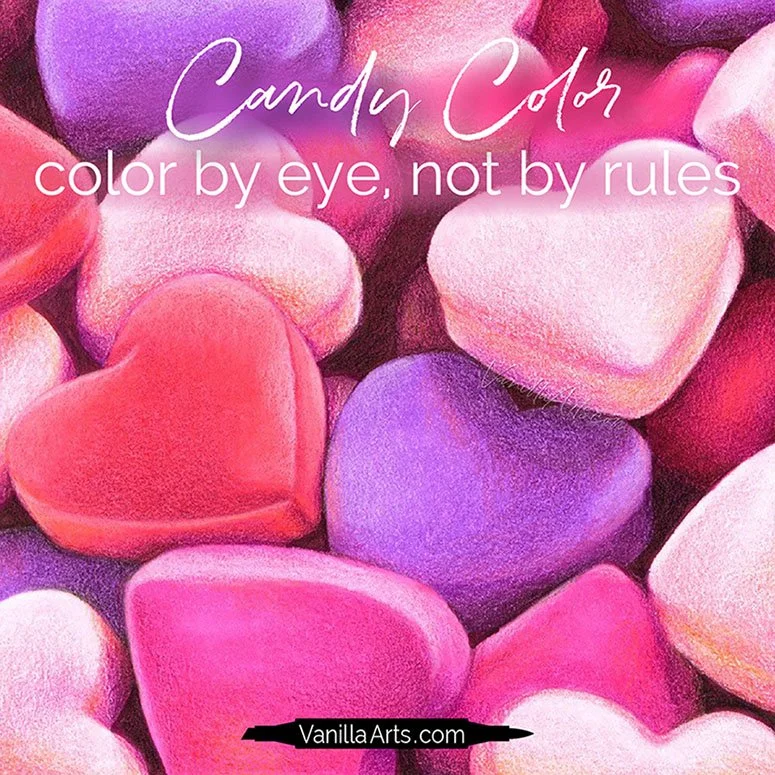
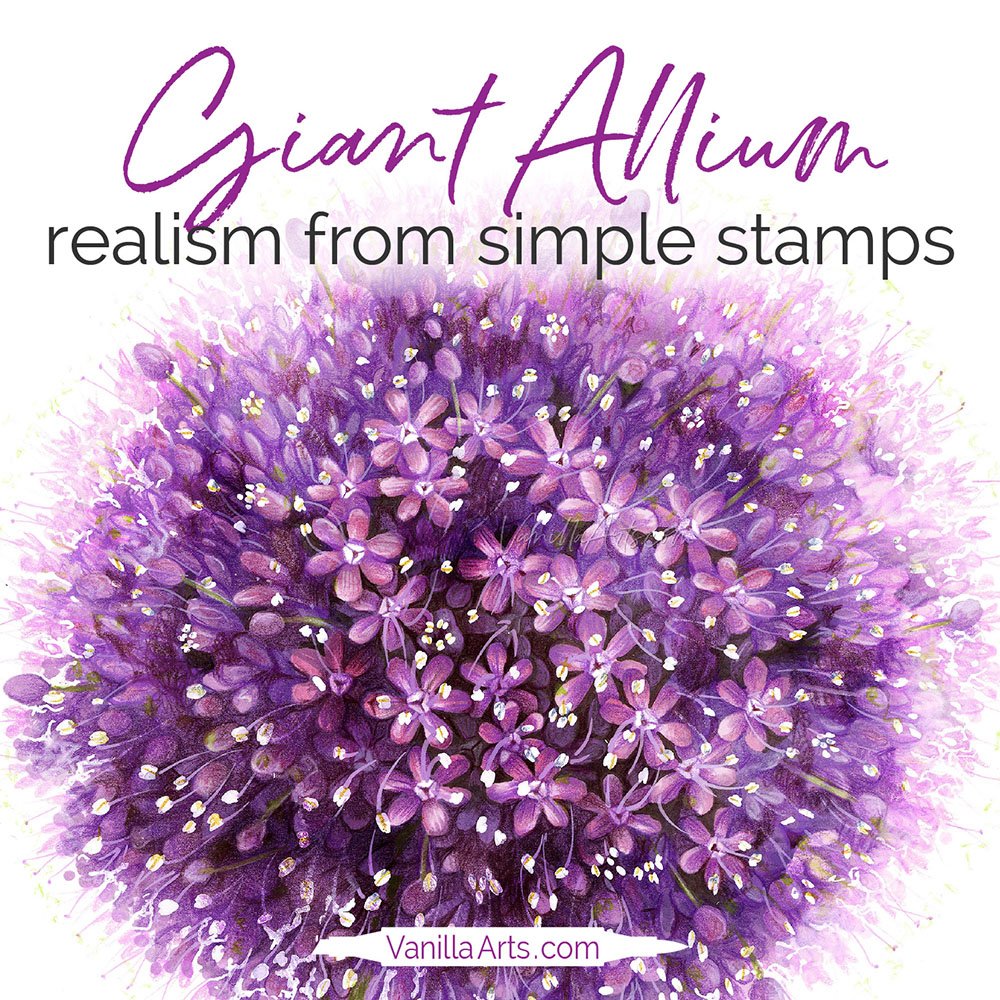
Here’s a taste of how I use Prismacolor Process Red 994. Each lesson project teaches realistic coloring techniques using professional markers and colored pencils.